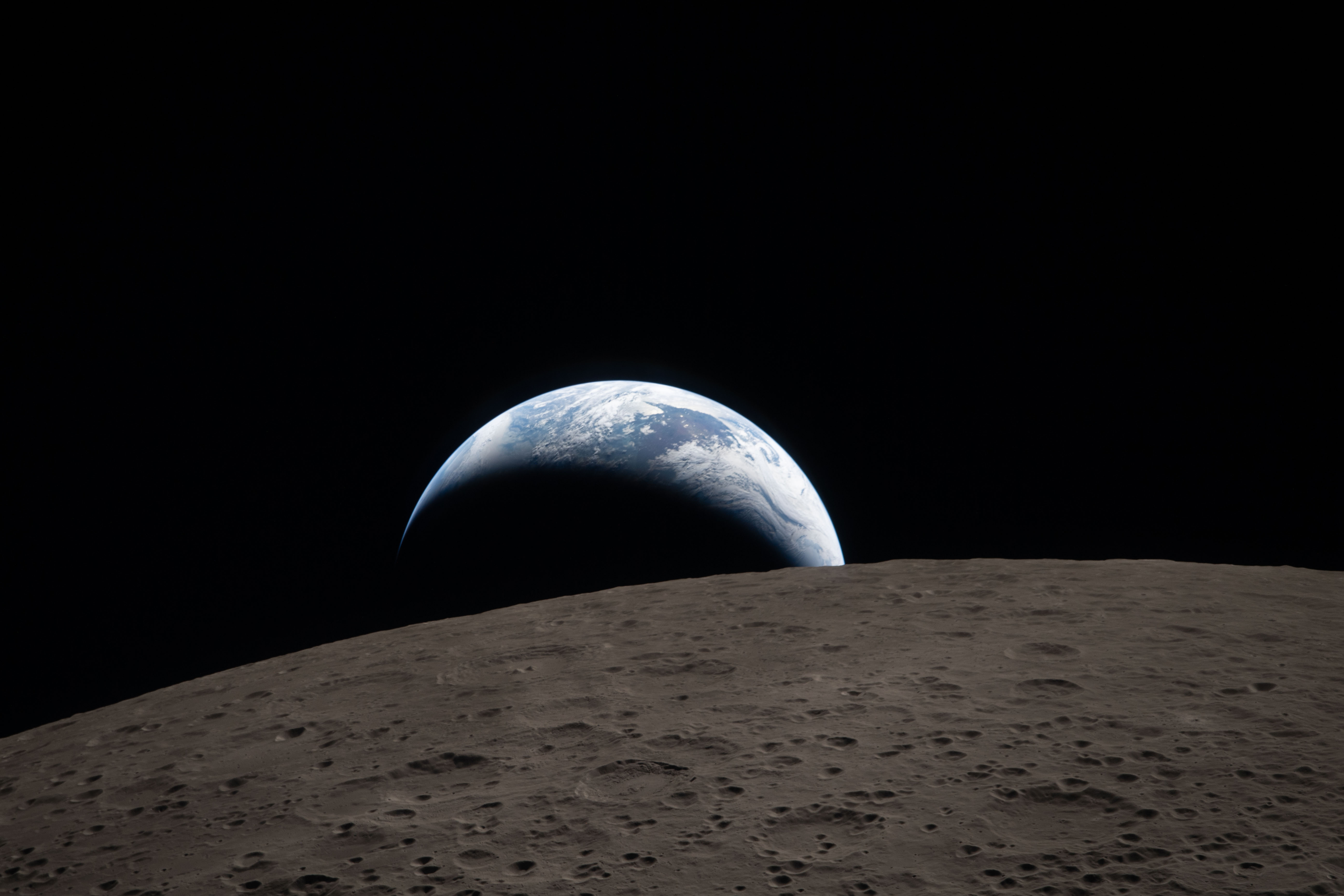
Image Credit: NASA
This week four human beings left Earth and went the furthest humans have ever been, travelling 406,771km away from home. For forty minutes they dipped behind the dark side of the Moon, seeing things that no one has witnessed with their own eyes before. For that time I expect mission control and the astronauts’ families all felt as if they held their breath; on earth forty minutes is no time at all to be out of contact, but in space it is a long, dark time.
Five years ago my husband Kieran left Earth, too, and ventured into the black; unlike (God willing) the Artemis II crew, he is never coming back.
For the past few weeks I have felt as if the half-decade anniversary of my husband’s death by suicide deserved words of some meaning and import, but felt I had perhaps said everything I could say. And then Artemis II came, like a sign from the heavens. I know for many people around the world, in a time wracked by political instability and existential fear, the pure wonder of this mission has felt like a gift. A reminder that we can be more than petty cruelty, that we can do more than grub for profit; that we can keep lifting our eyes skyward and can keep striving to be better people than we were before.
On Tuesday, after Artemis II regained contact with Earth, the crew talked about two craters that they had seen on the dark side of the Moon. One they asked to name Integrity; the other – “is a bright spot on the Moon, and we would like to call it Carroll.” I hadn’t known, until I saw the video, that Commander Reid Wiseman belongs to the same club I and 100,000 British people are part of – being widowed under the age of 50. Wiseman lost his wife to cancer in 2020, a year before Kieran died. His wife Carroll was an intensive care nurse and mother to their two children, and on his official NASA profile he says “Despite a long list of professional accolades, Reid considers his time as an only parent as his greatest challenge and the most rewarding phase of his life.”
I cried hard when I watched the video the first time; I cried again finding the link to share with you now, hearing the wobble in astronaut Jeremy Hansen’s voice, seeing the way the crew held one another. There was so much love expressed in that moment, for Reid, for his children, and for Carroll – who has gone somewhere we cannot follow or see, as dark as the far side of the Moon; but whose memory is now written into the mission record as clearly as if she had flown there herself.
Being bereaved – particularly being bereaved suddenly and traumatically by suicide – can feel like a journey to the dark side of the Moon. The Artemis II crew talked about how the Earth looks so far away, with the Moon looming before them. Particularly in the early stages of grief, it fills your entire vision, making it hard to see or think or do anything that is not related to that grief. And it can leave you feeling as if you are as very far from home as 406,771km of space flight. Traumatic, complex grief can make you feel divorced from your old life, your loved ones, the world around you.
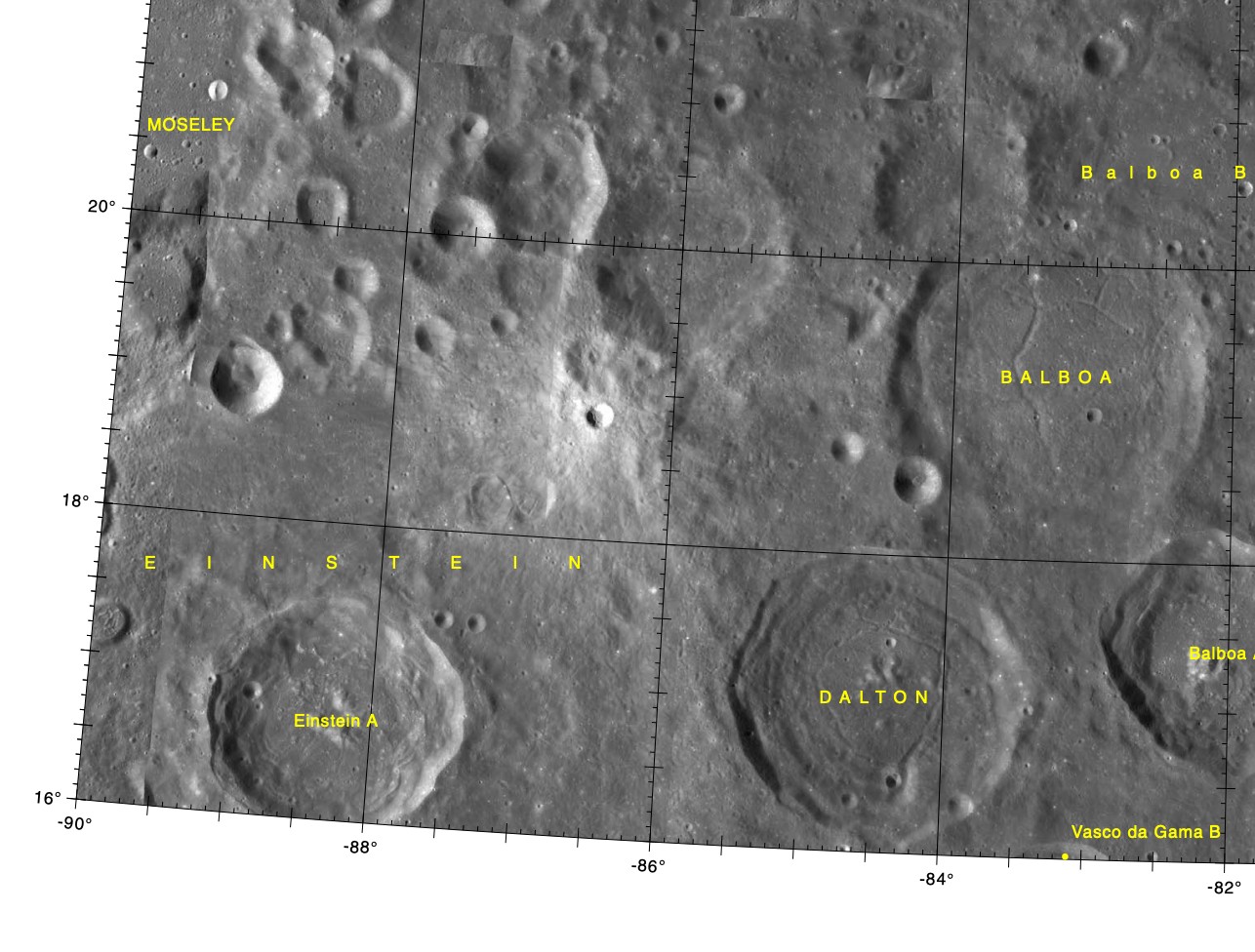
I have been fortunate because even in the most crushingly oppressive phases of my grief I have also always been able to find bright spots, even if they are as fleeting as the times the crater – on the nearside/farside boundary – will be visible from Earth. Part of this is the luck of my innate nature; part of this has been through extensive and expensive therapy, which has helped me process many, many layers of trauma and has rebuilt me from the inside out; part of it has been believing, despite everything, that loving Kieran and being loved by him was a gift that has helped make me the person I am, and the person I will be.
And part of it is because of you, my loved ones, who have borne witness to my grief and given me such comfort and solace. So many every day gestures that become much more than the sum of their parts – my parents, returning my washing cleaned and ironed, friends sending cards just-because, in laws who have embraced me as a daughter rather than (as all too sadly seems to happen) letting our family ties fragment: these things, these gifts of love, are so precious and mean so much. Thank you.
The greatest part of it – that ability to see the light in the dark – has come because I am mother to a child that Kieran and I made; she is so very like us both and yet utterly her own person, and loving her is the greatest privilege of my life. I can’t wait to see what she becomes.
In the weeks leading up to Kieran’s death, I very often felt that he was slipping away from me, becoming a strange shadow self I couldn’t recognise, one who was distant and sometimes cruel. Major depression is a terrible illness, and his behaviour before his death left me feeling as if my inner self had been riddled with the kind of pockmarked craters that we see on the surface of the Moon. It took a long time for me to fully acknowledge these harms, because what right had I to express pain over the buckshot in me when Kieran had blown up his whole life, leaving a dark void behind him? But in time, when the more immediate pain had subsided, I came to realise I needed to tend to those smaller wounds or I would never heal. I think I have, now, in lots of ways, although I know those places will always be vulnerable, that they could open again under the pressure of other griefs. But I am trying my best not to live in fear of those days.
I met Kieran on a bright spring day in 2006. I remember what both of us were wearing, although I didn’t know then that I was meeting my future husband, or that fifteen springs later he would be dead. I was slowly recovering from a vicious case of glandular fever, and had gone out for the evening for the first time in weeks. The world was beginning to open up again, and I stepped out into it feeling a tender tremble of hope.
I feel it still, this week where the US President has threatened obliterating an entire nation via skyborne bombers, and three men and a woman have gone far amongst the stars, and Britain has had a brief two days of sunshine warm as summer. I wish, I wish, that in that cold spring of 2021 Kieran had been able to feel it too, that even the craters within him had the potential to be vessels for a bright spot on the Moon. Lately our daughter and I visited Wells Cathedral, where we left a prayer request in his name. Our daughter – whose father has been gone nearly half her life so far – wrote: I will always remember you, Daddy.
We will. We do. And we come back from the far side of the Moon.
Kieran James Binnie, 26 May 1982 – 10 April 2021.
If you would like to make a donation in Kieran’s memory, I suggest Warley Woods Community Trust – the Woods are a beautiful place Kieran loved and where we have all spent happy time together. I have set up a fundraiser page here (if it isn’t live when you click the link, please try again later; the Trust is a small organisation so it might take a minute for the page to be approved).
Sometimes people ask if they can support me; I am doing ok, but if you want to put a little tip in our daughter’s savings account, I am happy for you to do so here.
 Rachel E. Moss